Zola vs The Knot (2026): Websites, Registry, Fees and What "Free" Really Costs
Choosing between Zola vs The Knot comes down to one question: do you want the better registry experience or the bigger planning ecosystem? Zola wins on registry design and cash funds built into a clean flow. The Knot wins on vendor search, a fuller planning suite, and an Android app — which Zola no longer has.
Both wedding websites are genuinely free to build and publish. The costs appear at the edges: custom domains (from $17.99 on Zola, $19.99/yr on The Knot), a 2.5% card-processing fee on cash gifts at both, and a business model where you and your guests are the audience for ads and partner offers.
Key takeaways, verified on both platforms on September 1, 2026:
- Websites are free on both. Zola advertises “no hidden fees”; The Knot says “no required fees or hidden costs.” Both claims held up when we checked.
- Custom domains cost extra everywhere: from $17.99 at Zola, $19.99/yr at The Knot ($99.99/yr for a .wedding domain).
- Cash funds are “free” with an asterisk: both platforms pass a 2.5% credit-card processing fee to someone; the truly free path on both is Venmo balance or a linked bank account.
- Apps: The Knot runs on iOS and Android. Zola shut down its Android app on January 1, 2023, and remains iOS-only.
- Both are ad-funded ecosystems. The Knot Worldwide’s California notice states that some disclosures of your information “may be considered a ‘sale’ under the CCPA.”
- If you only want a beautiful site with RSVP and no registry ecosystem, a pay-once tool (covered at the end) can beat both.
Zola vs The Knot at a glance
Zola and The Knot offer the same core product — a free wedding website with RSVP and a registry attached — but they differ on domain pricing, template count, registry model, apps, and how their advertising business touches you. The table below compares the eight points that actually change the decision.
| Zola | The Knot | |
|---|---|---|
| Website cost | Free to create and publish (“no hidden fees”) | Free (“no required fees or hidden costs”) |
| Custom domain | From $17.99 | $19.99/yr, or $39.98 for 2 years; .wedding domains $99.99/yr |
| Templates | ”Over 600 templates” (Zola’s own count) | “100+ designs” (The Knot’s own count) |
| Registry model | Native store + add gifts from any store via browser extension + cash funds | Aggregator: link any external registry + own store + cash fund with Venmo |
| Cash-fund fees | 0% platform fee; 2.5% card-processing fee (guests cover by default); Venmo/bank = free | Free to create; 2.5% processing fee on card payments; Venmo balance/bank = free |
| RSVP & guest list | Online RSVP with meal preferences, guest list tools | RSVP tracking + free guest list manager |
| Mobile app | iOS only (Android app shut down Jan 1, 2023) | iOS and Android |
| Ads & data | Ad- and commerce-funded ecosystem | Ad-funded; CA notice: disclosures “may be considered a ‘sale’ under the CCPA” |
For scale on the domain line: the pay-once alternative at the end of this post charges $59 one time for the software, plus $20 for a .com domain with the first year of registration included.
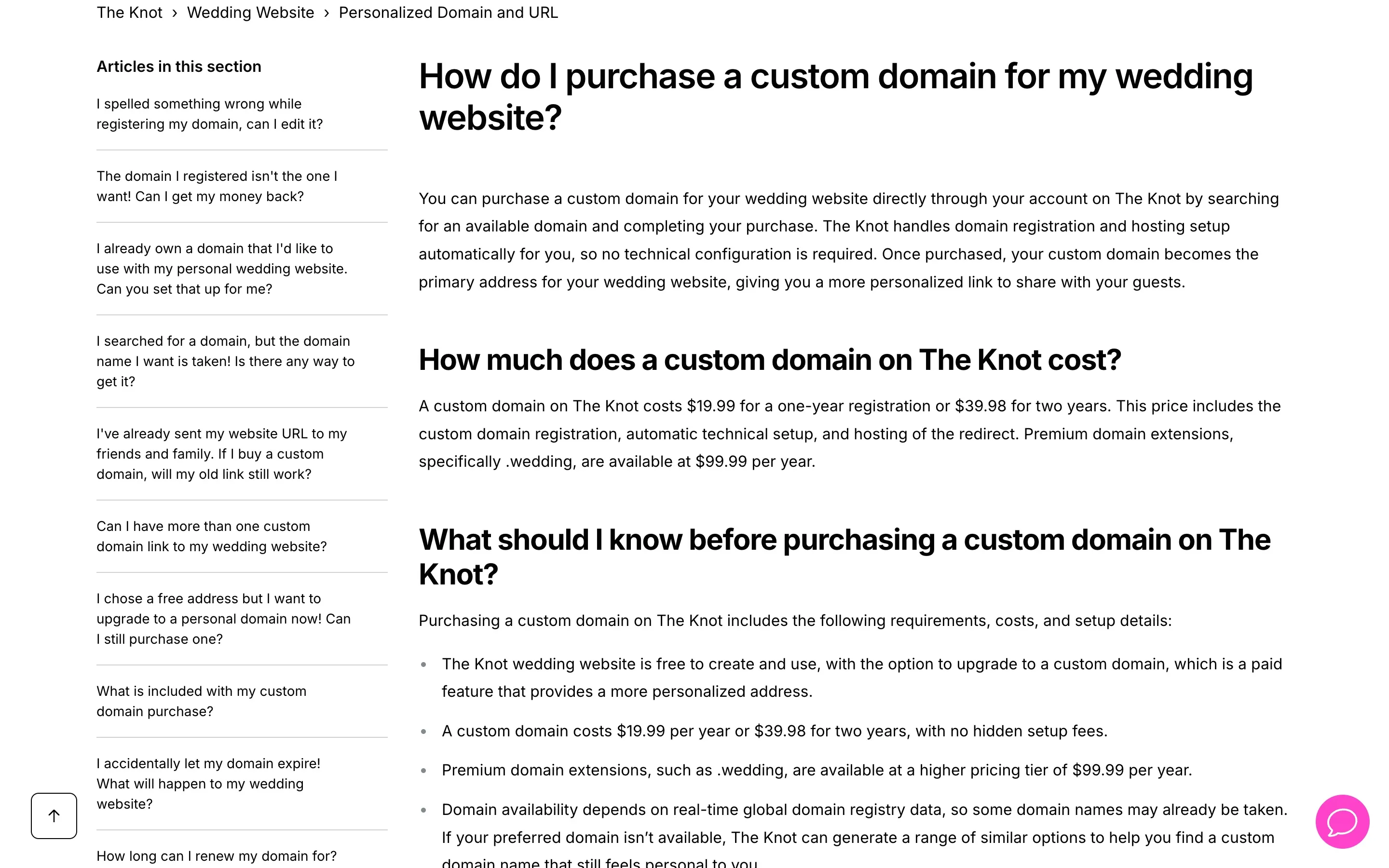
One detail a quick comparison misses: The Knot’s domain prices are not on its website-builder page at all. They live in a help center article, which is where we verified them.
Websites and design: Zola has more templates, both are free
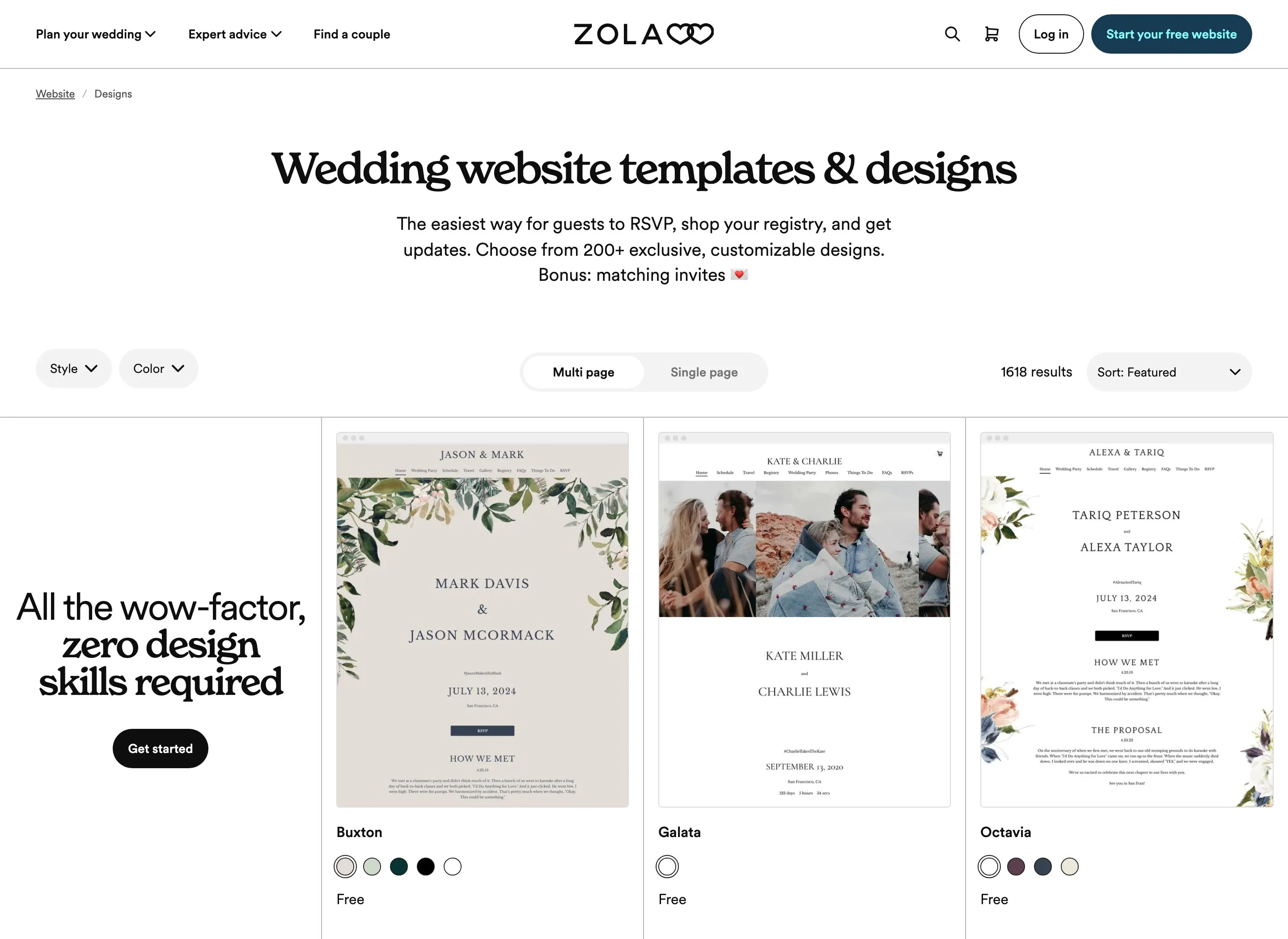
Both builders are free and fast, and neither charges to publish. Zola claims “over 600 templates” against The Knot’s “100+ designs” — both figures are the companies’ own counts. If template variety decides it for you, Zola has the wider catalog; The Knot counters with designs that match its printed invitations.
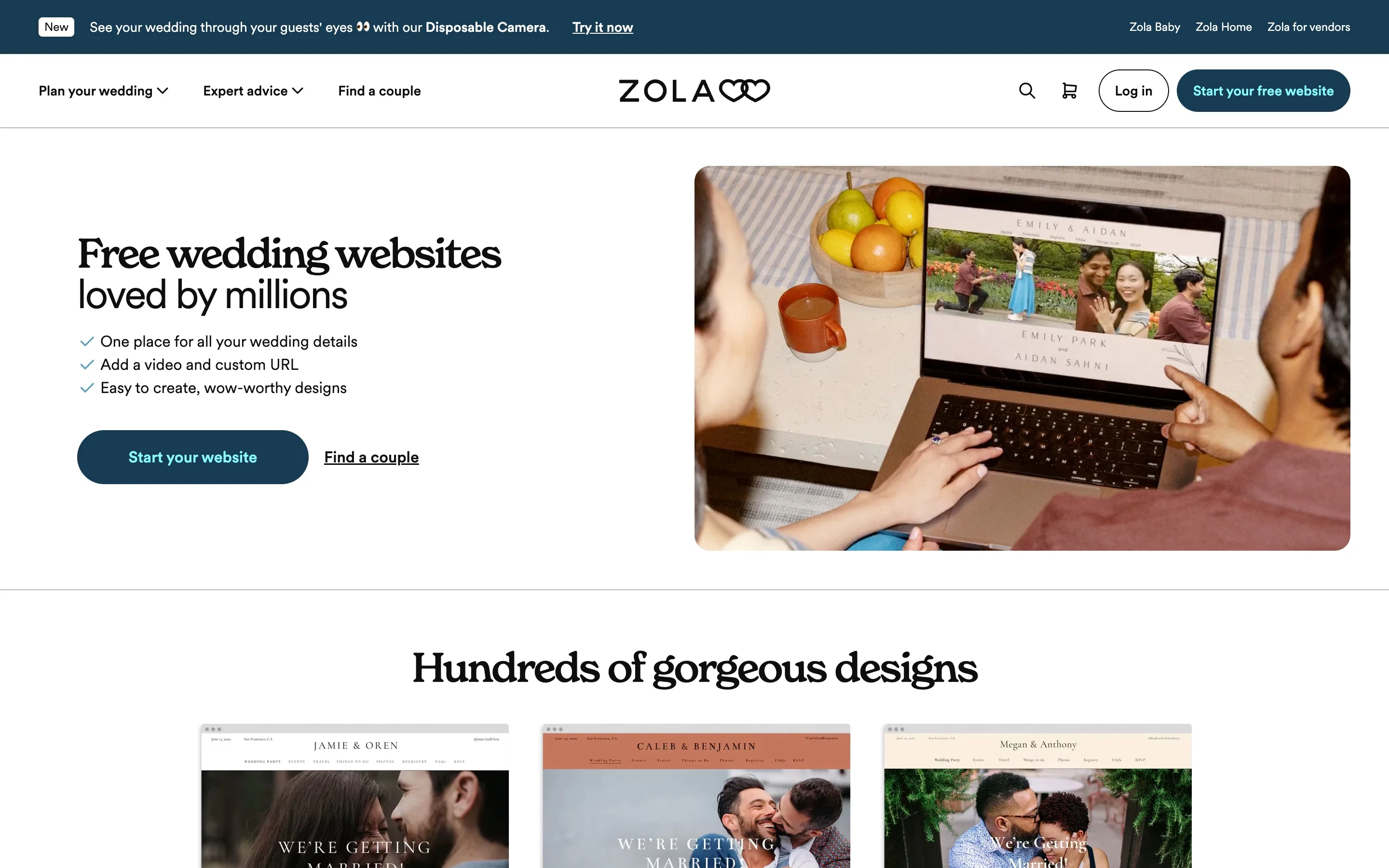
Zola says it has been “trusted by two million couples,” and its builder emphasizes speed: pick a design, add details, publish. Password protection and registry integration are part of the free tier per its own FAQ.
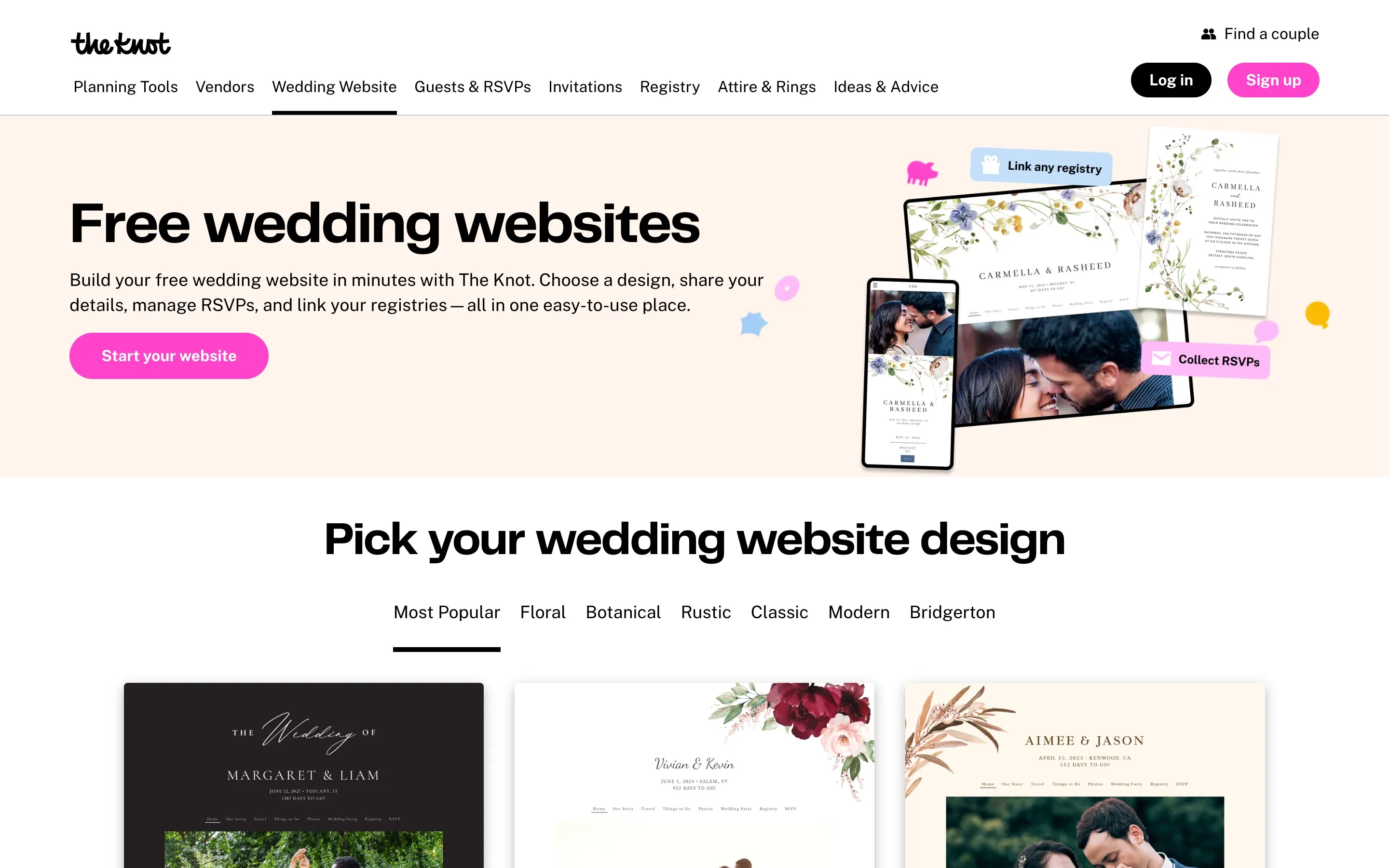
The Knot’s angle is coordination. Most of its 100+ designs have matching invitations, save-the-dates and place cards, so the website and the paper goods look like one set.
Registry: two different models
Zola runs a registry store; The Knot runs a registry hub. On Zola you shop its own catalog, add gifts from any other store with a browser extension, and create cash funds in one flow. On The Knot you link registries you already have elsewhere, add items from its own store, and attach a cash fund co-branded with Venmo.
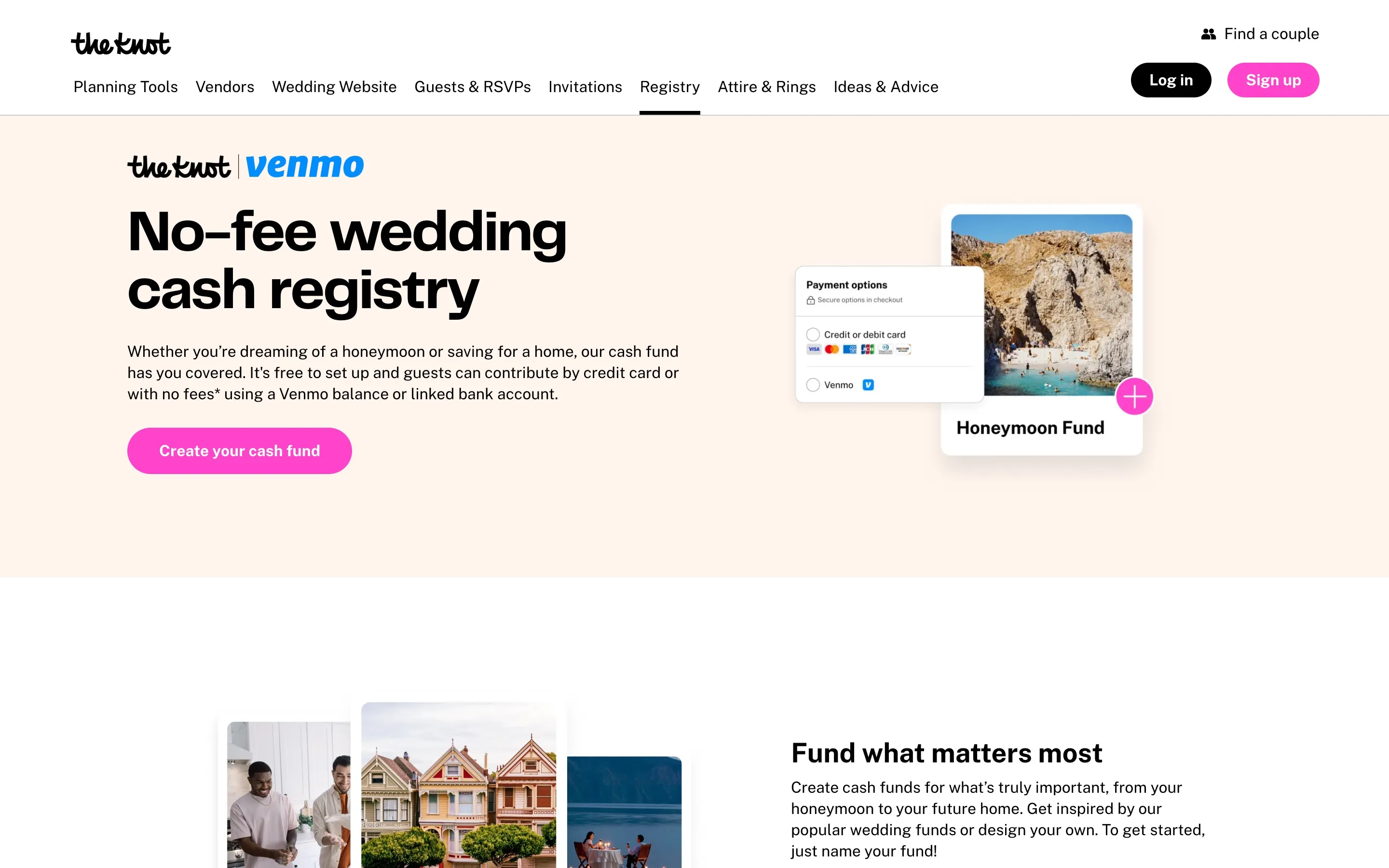
The practical difference: if your gifts will mostly come from one place, Zola’s single flow is cleaner. If your registries already live at three different stores, The Knot’s link-anything model saves you from migrating them.
Cash funds and fees: what “free” really means
Neither Zola nor The Knot takes a cut of your cash gifts. On both, though, a guest paying by credit or debit card triggers a 2.5% payment-processing fee; the genuinely fee-free path is a Venmo balance or a linked bank account. The 0% marketing and the 2.5% fee describe different payment routes.
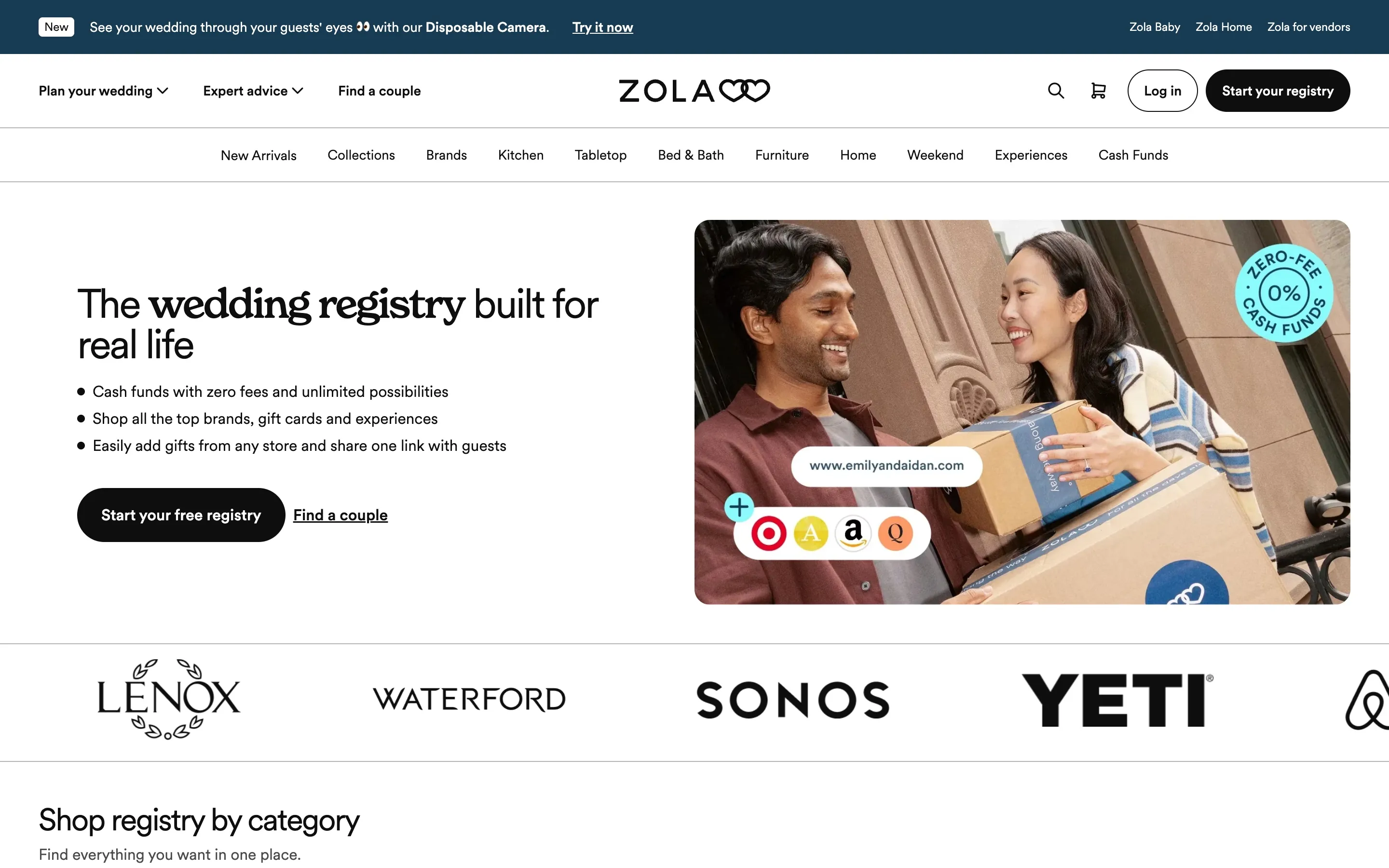
Here is how that looks on Zola. The registry page wears a “zero-fee cash funds” badge:
And Zola’s own FAQ, two clicks away, explains the 2.5% credit-card processing fee that appears as a “Handling Fee” at checkout:
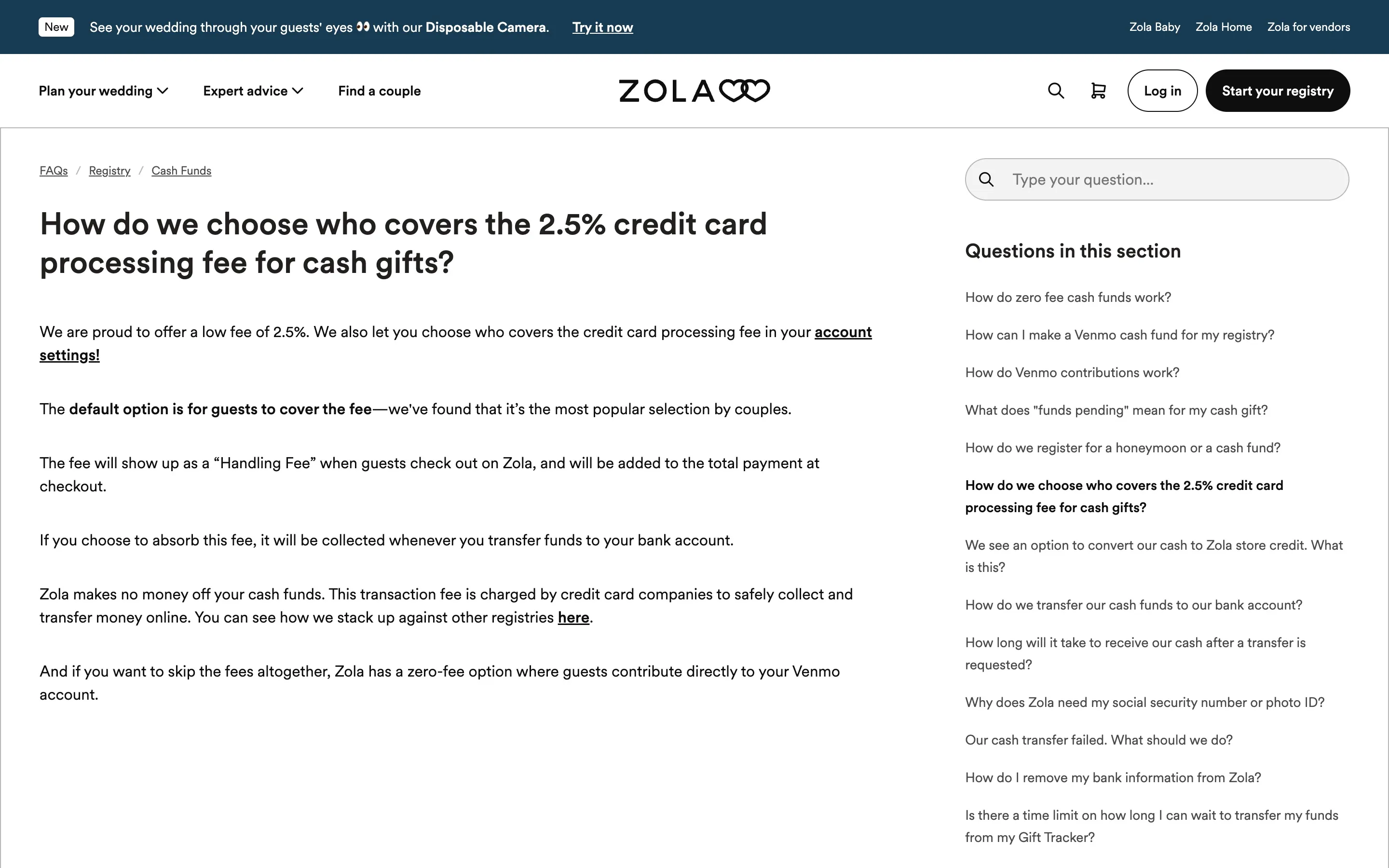
Per that FAQ, guests cover the fee by default, you can choose to absorb it, and Zola states it makes no money off cash funds. To skip fees entirely, guests contribute directly to your Venmo account.
The Knot’s structure is nearly identical. Its cash fund is free to create, and its help center confirms a 2.5% processing fee applies when guests pay by debit or credit card — a fee it says is “not charged or retained by The Knot.”
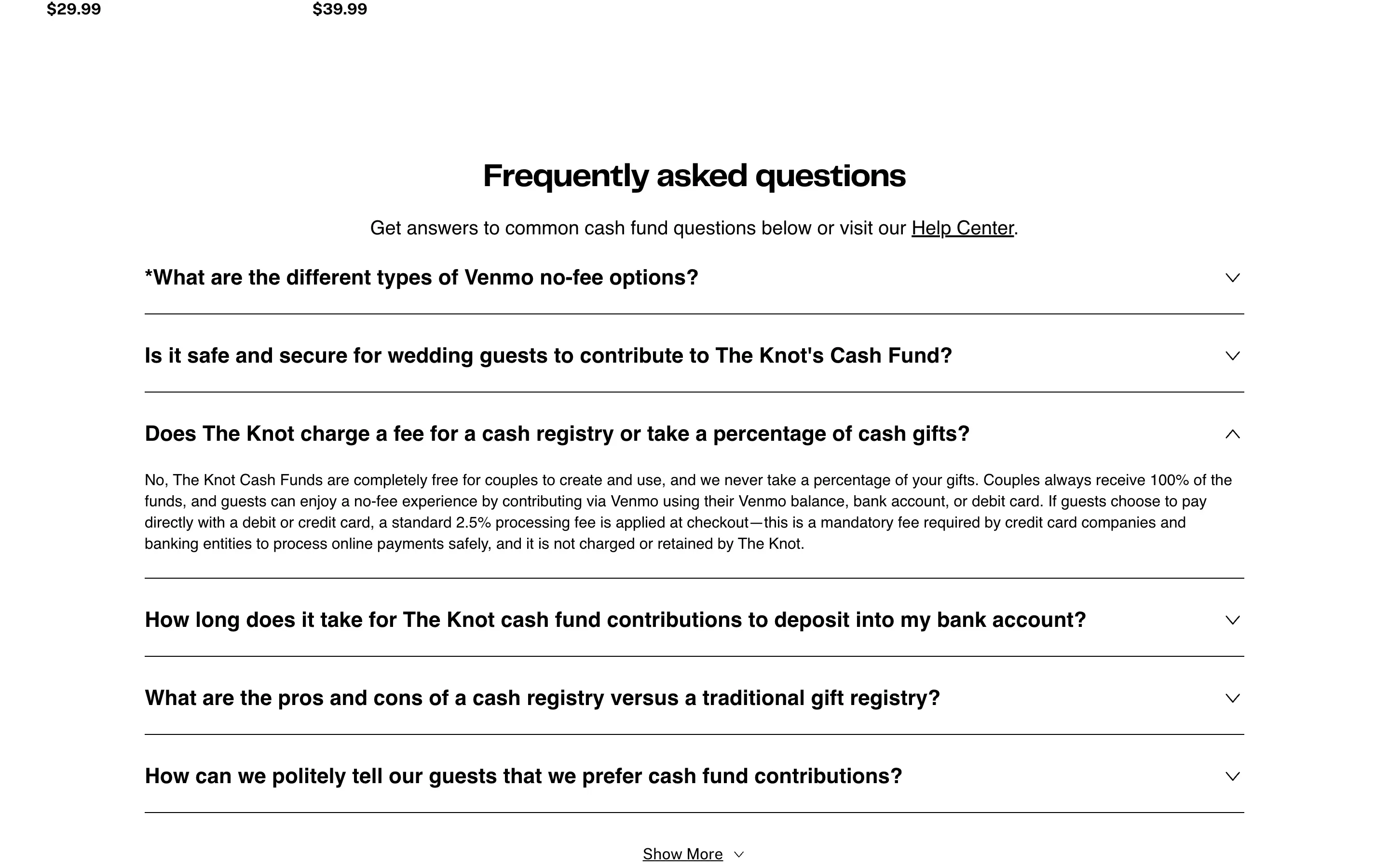
One nuance on The Knot’s Venmo route: paying through Venmo with a linked credit card carries a 3% fee. The free path is specifically a Venmo balance or a linked bank account. Tell your card-happy relatives, or budget for the fee.
RSVP and guest list tools
Both platforms include online RSVP and guest list management in the free tier, and neither charges per guest. Zola’s RSVP supports meal preferences; The Knot pairs RSVP tracking with its free guest list manager. For collecting attendance, this dimension is close to a tie.
Zola’s own wedding website FAQ is also where its custom domain price appears: “Prices start at $17.99,” with the option to redirect a domain you bought elsewhere.
If you want a sense of what a good RSVP flow looks like regardless of platform, our wedding website FAQs post covers the questions couples actually get from guests.
Apps and day-to-day: the Android gotcha
The Knot has mobile apps for iOS and Android. Zola is iOS-only: its own announcement confirms the Zola Android app shut down on January 1, 2023, and it has not returned. If either of you carries an Android phone and wants to manage the wedding from an app, that decides this category by itself.
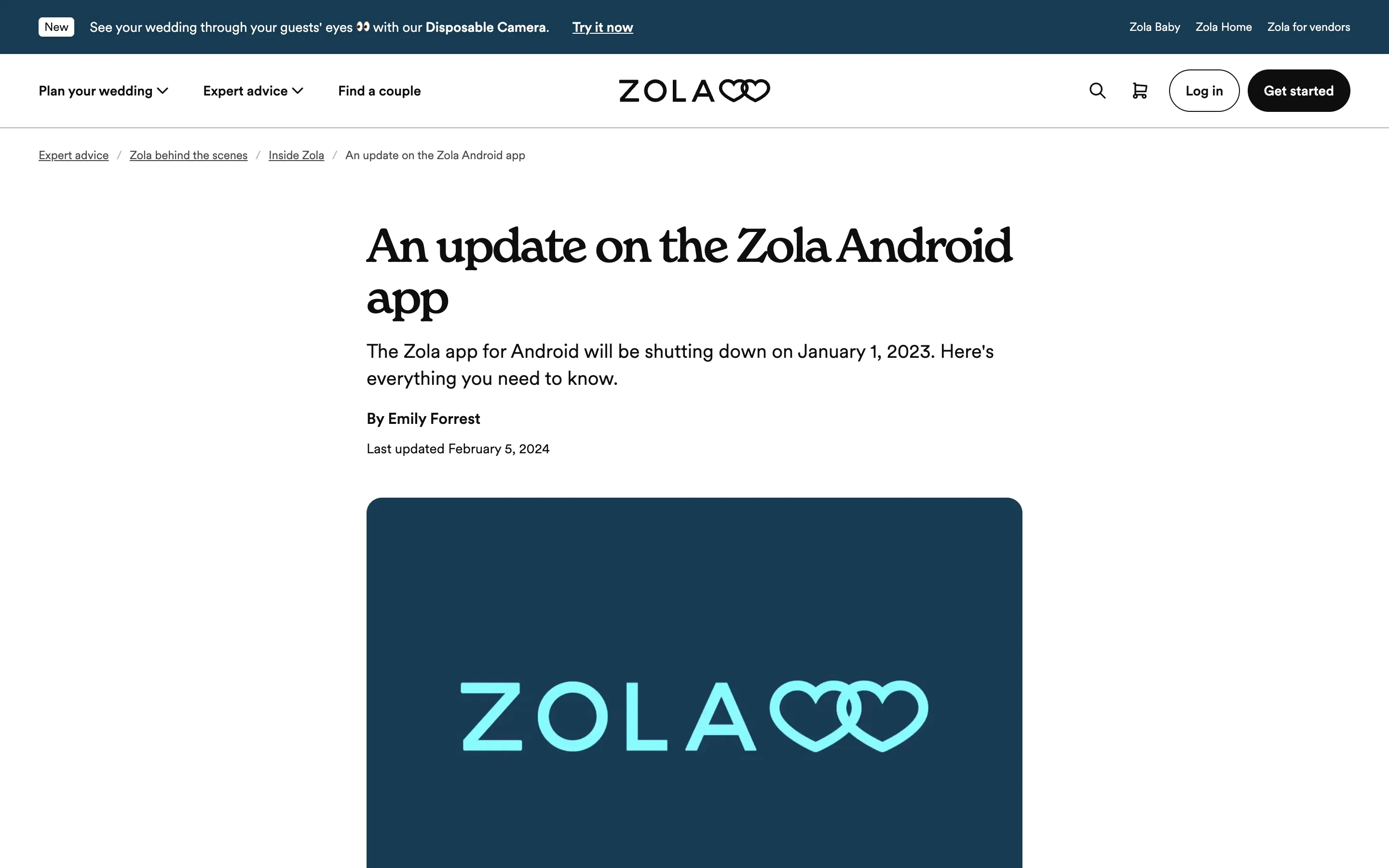
Android users can still use Zola through the mobile website. But day-to-day tasks — checking RSVPs at lunch, thanking a guest for a gift — live better in an app, and only The Knot offers one to both of you.
Know what “free” means for your guests’ data
Zola and The Knot are free because they are commerce and advertising businesses: registries, paper goods, vendor marketplaces and partner offers fund the website you get at no charge. That trade is legitimate, but it is worth reading in the companies’ own words before you upload a guest list.
The Knot Worldwide — which also owns WeddingWire — publishes a California collection notice that says, verbatim:
“This disclosure of information may be considered a “sale” under the CCPA.”
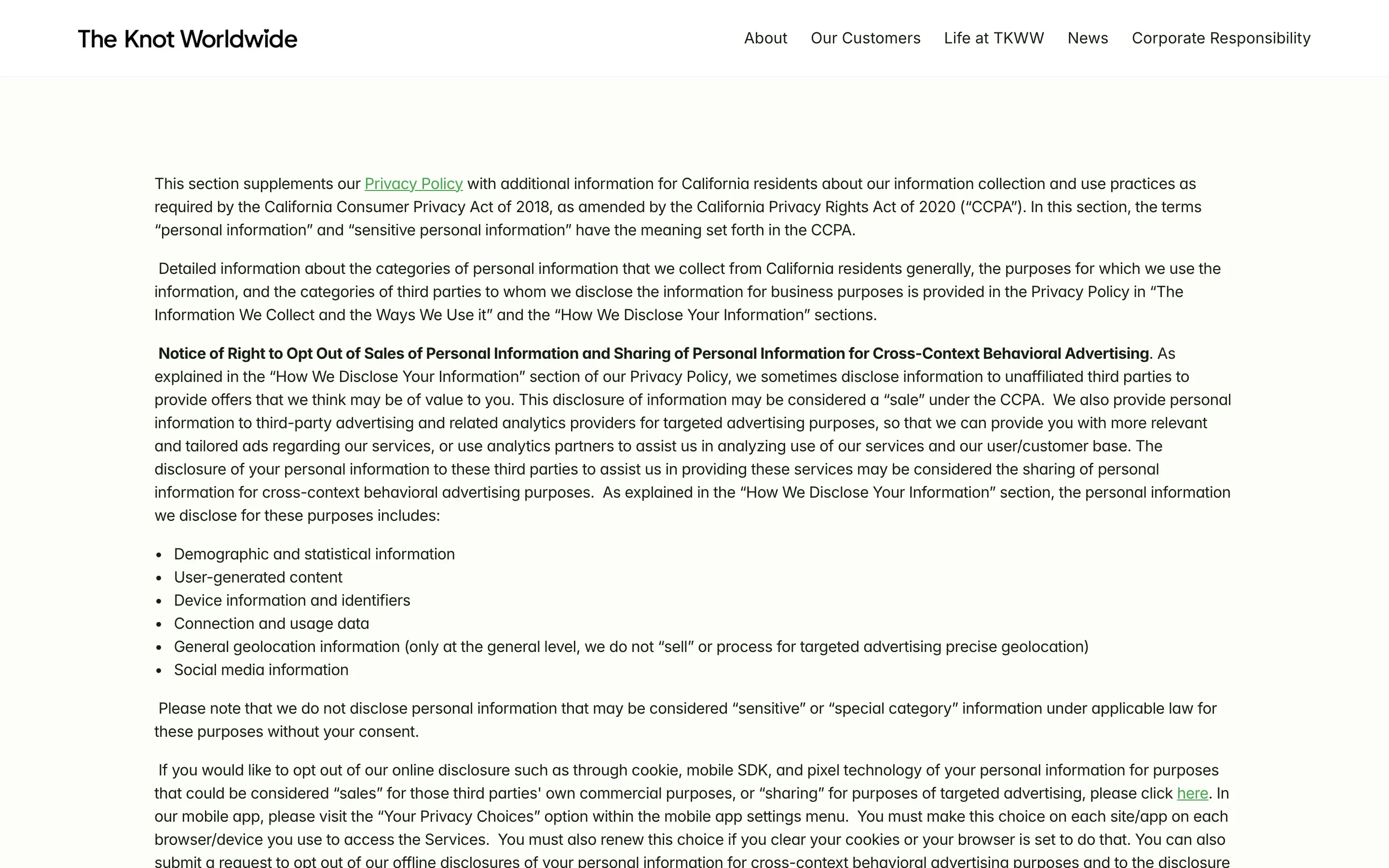
To be precise about what that does and does not say: it is a legal disclosure about sharing data with third parties for offers and targeted advertising, using the CCPA’s broad definition of “sale.” The notice also lists the categories involved — demographic information, user content, device identifiers, usage data — and explains how to opt out. It is not an admission of anything beyond that, and California residents get the opt-out by law.
Zola’s model is more commerce than advertising, but it is an ecosystem too: the free website is the front door to its registry, paper and vendor businesses. On both platforms, expect marketing emails and partner promotions as part of the deal.
When Zola is the better choice
Pick Zola if the registry is the center of your planning. Its store, add-from-anywhere extension and cash funds live in one clean flow, and its “over 600 templates” give you the widest design catalog of the two.
Zola makes sense when:
- You want registry + website in one flow, managed in one account.
- Design variety matters and you want the larger template catalog.
- You prefer a platform whose revenue leans on commerce rather than vendor advertising.
- Everyone managing the wedding is on iPhone (there is no Android app).
When The Knot is the better choice
Pick The Knot if you still need to find vendors. Its marketplace lists roughly 200,000 wedding vendors, its planning suite (checklist, budget, guest list, vendor messaging) is the fuller one, and it is the only platform of the two with an Android app.
The Knot makes sense when:
- You are still hunting for a venue, photographer or caterer and want reviews in one place.
- Either of you uses Android and wants app access.
- Your registries already live elsewhere — The Knot links any registry instead of replacing it.
- You want website designs that match printed invitations from the same company.
When neither fits, the lightweight third option: YesLovey
There is a third lane this comparison usually skips: couples who do not need a US registry ecosystem at all. If your wedding is in Europe, if guests will give cash or transfers directly, or if you simply want a beautiful site with RSVP and nothing selling around it, an all-in-one platform is more machinery than you need.
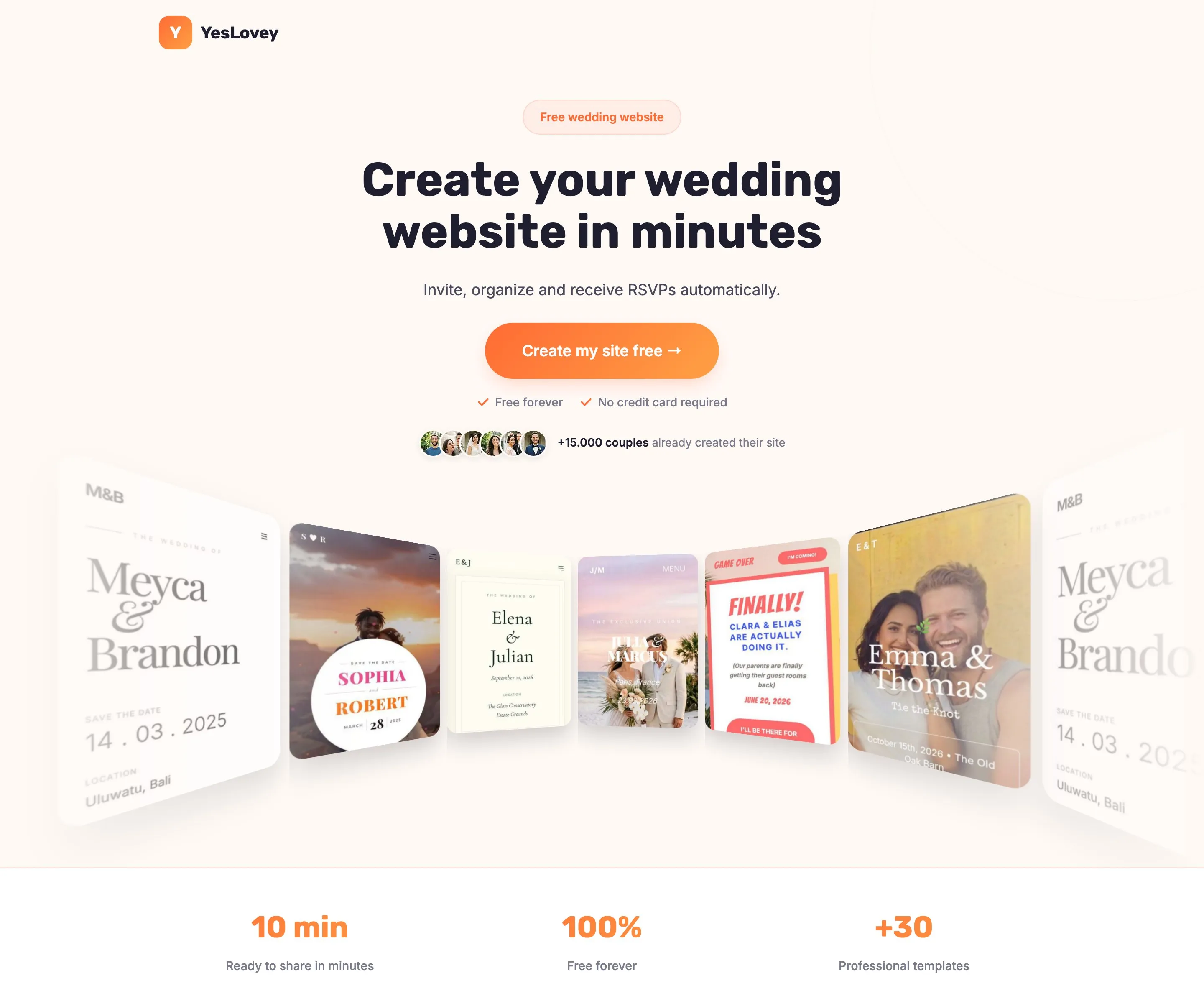
YesLovey is a wedding website builder, not an ecosystem. The free plan includes templates, a full visual editor, RSVP forms for up to 60 confirmed guests (companions included) and a free subdomain with a watermark. Pro is a $59 one-time payment — explicitly not a subscription — for all templates, unlimited forms, no watermark and a digital invitation. A .com domain is available for $20 more ($79 total), with the first year of registration included.
Honesty requires the flip side: there is no registry, no vendor marketplace and no planning suite. What you get is a site with no advertising, no registry commerce and no vendor marketplace around it. Start on the free plan; the $59 one-time payment is only for couples who outgrow its limits.
Try the tool for free
No sign-up, no card. Ready in a minute.
How we compared
Every price and claim in this article was verified on September 1, 2026, directly on Zola’s and The Knot’s live sites: their website-builder pages, registry pages, help-center fee documentation, and public announcements. The screenshots throughout the article were captured the same day. We did not create accounts or plan test weddings on either platform; this is a documentation-level comparison, checked at the source.
Two details only a same-day check surfaces. The Knot’s custom-domain prices ($19.99/yr, $39.98/2yr, $99.99/yr for .wedding) appear only in its help center, not on the builder page where you would look for them. And Zola’s “zero-fee cash funds” badge and its 2.5% processing-fee FAQ are both live right now — which is why this article explains the two payment routes instead of calling either platform’s claim false.
For more context before you choose, see our wedding website examples for what finished sites actually look like.
FAQ
Conclusion
If you need one line: choose Zola for the registry, The Knot for the vendors, and check which app store your phones use before deciding. Both wedding websites are free, both charge for domains, and both pass a 2.5% card fee on cash gifts unless guests pay by Venmo balance or bank.
And if the guests’-data section gave you pause, weigh the third option. Zola and The Knot fund a free website with a commerce and advertising ecosystem; a website-first tool funds it with a $59 one-time payment and skips the ecosystem. Both are fair deals — pick the one that matches what you actually need.